Friday, August 26, 2016

Jealousy. The parasite that can murder relationships and happiness. Open your gate and live free!

The most basic condition for happiness, according to the teachings of the Buddha, is freedom. Freedom from the mental formations of anger, despair, jealousy and delusion, described as poisons or symptoms of mental illness (not being mental illness yet).
As long as these poisons are still in our heart, happiness (peace of mind) cannot be possible.

Jealousy is a parasite that causes irritation, distance, hate and imprisonment. Looking more deeply into this ‘mental poison’ you can discover at least it has to do with two different phenomena: greed and clinging. And greed and clinging always have a relationship with (material) things, circumstances, or relationships. One cannot exist without the other.

Greed you can see as an inordinate longing for wealth, status/social position, or power. Somebody would like to have something, that somebody else already has but it is hard for him/her to get it. Most of the times this ‘hunger’ has to do with material things or the idea of a better or only bright side showing situation someone else is in. A ‘rich’ man often can be poor. What, after all is wealth, status and power? Nan Huai Chin: " We leave this world with nothing. No medals, no rewards, no success, no failure.”

The manual of peace (A Dhammakaya Foundation Paperback) says:
“Never look down on your own wealth” This might mean being content with one’s parents, one’s spouse and children, our work or one’s nationality. Even if there are faults with these things, it is necessary to cultivate the ‘pride’ for them (note: no arrogant pride) that will make it seem worthwhile gradually to make the necessary improvements – rather than the attempt to solve the problem by stealing away someone else’s (spouse, work, etc.). If a person is content with something, they tend to progress in that thing –because contentment, properly understood gives us the encouragement to expend effort on the things we come into contact with. You need to accept how you are and use what you have to the very best of your ability.

If people already feel confident and satisfied with the things they have or the situation in which they are in, some want to firmly cling on it. Actually not accepting or wanting to let go, no allowing of any change. Jealousy in this situation has to do with monitoring and, if necessary, repel all possible attack that, only in their thoughts and sometimes due to past experiences, could ruin their positive feeling or emotion. So there is a constantly conscious and alert state of monitoring possible ‘intruders’.

A person who is jealous, at least is suffering from feelings/emotions of insecurity, lack of confidence, fear, concern and anxiety. He/she puts him/herself in a prison cell of anger, hatred, shortage, helplessness and antipathy. An attitude and behavior withholding him/herself being open, interested, happy, positive, peaceful, loving, strong and relaxed. Being captured by his/her own mental poison and so not experiencing freedom and complete happiness.

Jealousy, unfortunately, is not just poisoning the person who is jealous. The mental symptoms infect and pollute relationships with others. Such contamination may ultimately be 'fatal' for that relationship.
Therefore you can see it as a "natural way" to achieved just the opposite of what the jealous person want to correct or achieve. Jealousy becomes a kind of personal masochism. Hurting yourself because of dissatisfaction and the fantasies you created in your mind.

Detective behavior of one of the partners against the other – being always alert and awake and giving attention to possible ‘invaders’ –  show no confidence / trust in having, being able, or want to build an unconditional love relationship.

The natural response of the other partner is to find ways to appease the jealous partner. An unnatural behavior – always being alert not to come into situations where jealousy can emerge – arises. So he/she does not feel free in behavior anymore. Not wanting to make ‘mistakes’ (not being mistakes at all). And this unnatural behavior invites the jealous partner to be even more 'suspicious'. So actually, the situation will only get worse.

Already two persons now are suffering of the lack of freedom and a lack of happiness because ‘something’ that’s only going on in the mind of one of them.

Jealousy creates distance and is a parasite that eats away the union in a love life. People who love(d) each other can feel very harmed by this.

Is there a solution?
What is described above, in general, is all about the consequences of jealousy. Want to do something then you have to start at the cause, at the source.
It is to choose a way of working on that source (where does the jealousy come from? How does it support you? What does it bring (or what does it take away from you, what do you lose)? A way of practicing and creating confidence. A step by step learning to manage your emotions until you get used to the ‘new way’ (a matter of trust, openness, tolerance, generosity), and it has become a behavior of satisfaction and trusting yourself.

Do not compare yourself with others. Compare your current relationship not with previous experiences you've had. Trust yourself and the other (until the contrary really would appear) and offer each other opportunities. Use your imagination and empathy to make yourself feel better instead of worse. Stop playing the detective in your relationship. Be mindful, open and aware, of what's going on (only) in your mind. Give your full attention to the love in the relationship you have (everything you give attention grows). Give conscious love to yourself (you are the one who live 24 hours with yourself every day so why not start a love relationship with yourself first). Open your gate! Let things flow. Release each other in who and how you are and how you behave to share with each other and with the world around in the best way your uniqueness. Be complete, all-one. Appreciate and accept differences in characters and sometimes cultures and religions and trust your connection. Thus strengthening your mutual bond instead of ruining him.

Mindfulness contains the energy of insight. Insight you can see as enlightenment. To make things and situations lighter, freer, so things can flow (again).

Thich Nhat Hanh: “Insight is the liberating factor. It is what frees us and allows transformation to happen...”  

Jealousy can ruin your peace and end relationship; it can also be a signal to you that it's time to make a change. Rather than letting jealousy infect your relationship with others, use its appearance as a reason to better understand yourself. If you are having to deal with the jealousy of others, draw clear boundaries and protect yourself to stay yourself.

A final, potentially sad, step is the last step of ‘equanimity’ (a way to stay balanced and stop worrying or suffering).
If you cannot or do not want to accept the jealousy situation with another any longer... find a new situation and be aware you may find different things in that new situations you will have to encounter after a while again.

Open your gate and live free (together). Live and be happy with what you have and with the uniqueness that you are!

Frans Captijn
Host / Catalyst / Talenteer at Captijn Insight

Captijn Insight“Catalyst in your process to new sustainable flow in life and work. Whether you are an individual, couple, team or an organization.” 


Friday, August 19, 2016

Forgiveness. Insights for a long life. Is there really something to forgive?

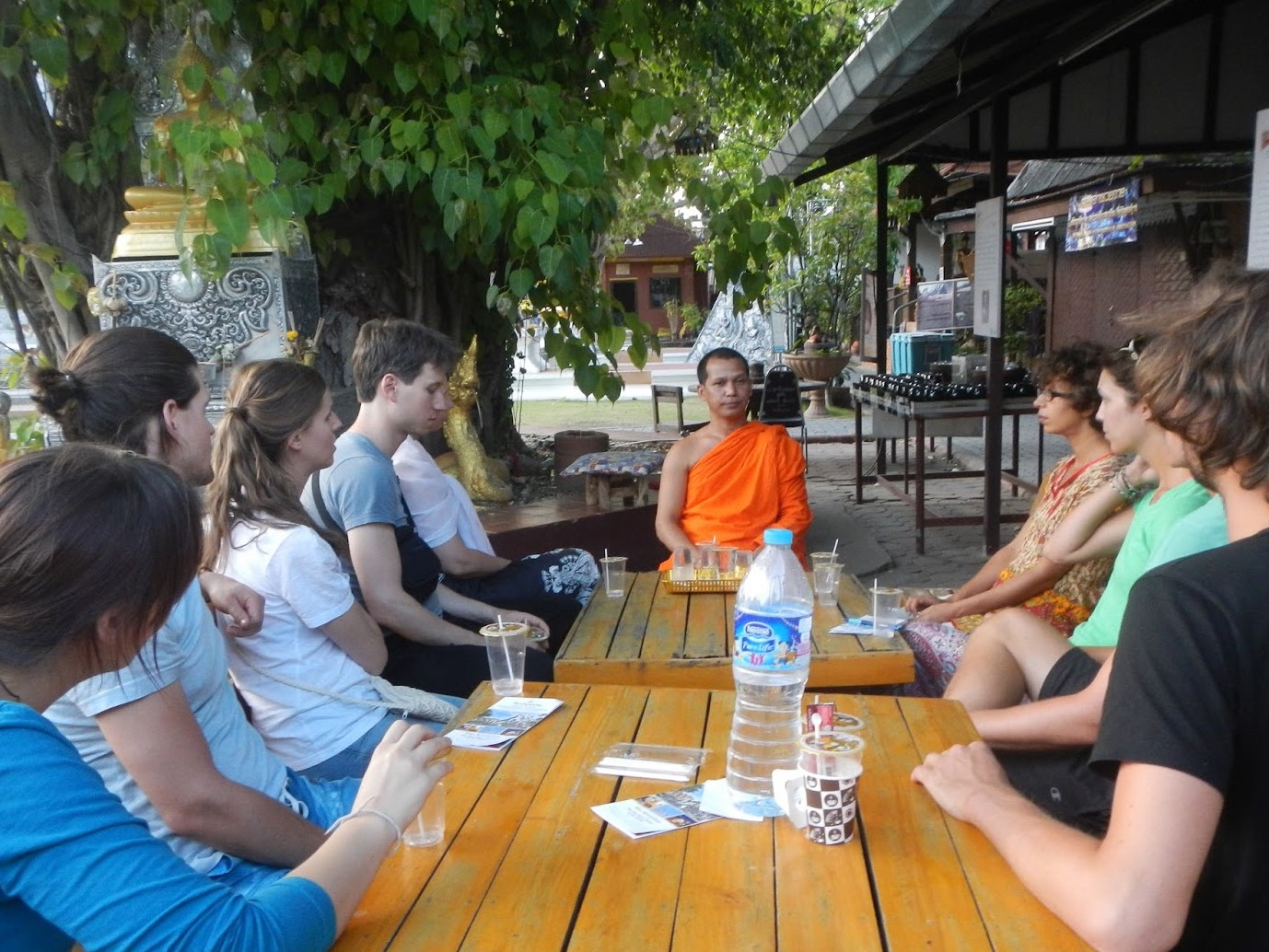
I always invite our international guests during my morning classes to address things they have questions about in relation to Thai culture, Buddhism or life themes they are suffering or worrying about. Independently of each other the last couple of weeks I got quests about ‘forgiveness’. To address this theme, for me, shows people are suffering about it. It is an ongoing disturbing thing in their lives or in the lives of their relationships. A call to share some insights I got working here, joining classes at the Buddhist University in Chiang Mai, and out of my own cultural background so far.

Insight = Enlightenment. Don’t see it directly as a spiritual thing so you don't feel the need to read further. The meaning of enlightenment literally is to ‘drop the weight’ of your shoulders, to feel lighter, freer, to let go and to create space for new things to become that are already waiting for you to transform. To get flow in life again.

The actual meaning of the word ‘forgiveness’ you can see as ‘to give a new chance’. That’s something else than ‘to give a second chance’. When you (only) give a second chance you already created in your mind the wanted or expected outcome or circumstances in the future. So there is no freedom in the direction of the outcome.

Forgiveness has everything to do with something (in your opinion or in the opinion of someone else) ‘wrong-doing’ that happened in the past and is disturbing you now and possibly in the future. You do not want this disturbance any longer and it is not serving you at all.

In Buddhism ‘forgiveness’ is not a real big issue. I will try to give you some understanding about that.
First of all forgiving is a way of ‘giving’ where you do not have to make any physical effort at all. Buddhism learns ‘forgiveness’ is only in your mind. As soon as the thought crosses your mind to forgive, merit will arise already in your mind. Even when you haven’t expended the slightest physical effort, you have managed to earn yourself merit through giving ‘forgiveness’ (Abhãyadãna). Even giving others a smile instead of a scowl/dirty look will bring you merit.

To give is to take generosity, kindness. This means; ‘sacrificing your own ‘possessions’  for the benefit of other people, wholeheartedly, with the intention to honour the virtues of that person, or to assist a person of similar social standing, or to help someone who is worse off than ourselves’.
If you are not wholehearted about giving then it cannot be called ‘to give’ or to forgive. It is therefore broader than the equivalent word ‘Charity’ in Christian culture which is usually restricted to giving to the poor and the sick.

So here the introduction of intention, for the first time in relation to this topic is introduced.

So the second thing still is the question; Is there really something to forgive? A lot of times you will discover you are only disturbing your mind, so yourself, because you do not look deeper. During time you possibly made the story even worse or bigger. You cling on it and cannot leave your vicious circle of thoughts about it. 

In the Buddhist teachings we got the so called Noble Eightfold Path. One of the things in it is ‘Right Intention’.

Forgiveness has something to do with what happened in the past. This present moment, most of the time having more knowledge, understanding, build up wisdom and knowing more about the circumstances of that past moment, you can understand the ‘wrong-doing’ you did or somebody else did to you at that moment. So there is a different, better understanding.

Looking deeply you can ask yourself - or you can look back to the situation - if the underlying intention at that moment really was to hurt somebody else or if somebody else really had the intention to hurt you. 

There is a wonderful guided meditation / Dhama talk that says:
We can cause harm and other people can harm us. There is a lot in life that hurts us. You can sometimes feel hurt by what other people have done to you. But people are human, they make mistakes, they may be under stress sometimes, they say a sharp word. When your heart is open this can sting it. But most of the time there is no real malice, nothing personal intended in that. It is just that people are fallible and in different situations they act hastily and make mistakes. It is really easy to turn oneself in somebody wronged…, thinking; ‘this always keeps happening to me…’, everybody is against me.
Maybe, in a different way you can think, they try to make you a success. We are not perfect sometimes.

Sometimes we have to open up to forgiveness. Through meditation we can understand what it means. It teaches us that we need not feel graved and feel not retaliate when things turn against us.

Because actually everybody has his best interest and heart but some of the times they don’t show it. Some people are unfortunately so out of touch with compassion, love and wisdom, that they persistently do things that harm others. That’s  tragic but we should not lose heart when we notice that.  We have to know that there are people who are desperately confused and have yet to learn that the way to live is to abandon desires and cultivate kindness to all beings.

And remembering this, that enables us to live unselfish, live for the good of all beings doing that with promotes happiness and harmony.”

So a lot of times we suffer about our need to forgive others or others have to forgive us. If we look deeper and without judging we discover we or other people did not at all have the intention to hurt us. So what is there to forgive? Getting and sharing this insights and thoughts can clear things and feel enlightened, freer, lighter. Just an easy way to say wholeheartedly “Sorry”.  

Buddhism learns that the fruit of forgiving for us is a long(er) life. With your (inner) thoughts you are not toxifying yourself and your environment any longer. To express this in practice Thai people a lot of times connect forgiving others with extending the life of condemned animals (buying cows before being slaughtered and give them a longer life, or buy live fish at the market to release them to earn merit in a stream or river).

First of all try to get a deeper understanding without judging to discover the real underlying intentions at that wrong-doing time. When you discover no real active malice… what are you suffering about? Clear things in your mind and possible in right understanding. Share it with right speech (with right intention and heart connection) and feel (more) free again. The fruit? Long life.


Frans Captijn
Host / Catalyst / Talenteer at Captijn Insight

Captijn Insight“Catalyst in your process to new sustainable flow in life and work. Whether you are an individual, couple, team or an organization.” 


Friday, August 12, 2016

Reclaim conversation! The preparation to restore the art of communication.

We do not know the art of conversation any more. Without even being aware, we’ve actually moved away by technology from real communication in a way that it is hurting our interactions. Some people are even afraid of conversation. 

A couple of months ago I bought and studied the book “The art of communication” of Thich Nhat Hanh. Reading an article of sociologist Sherry Turkle, who studied 20-years the impacts of technology on how we behave alone and in groups, brought me to the idea that the first step to restore the art of communication is to reclaim conversation. Most people are not even ready to understand the art of communication.

Face-to face conversation is the most human and humanizing thing that we do. It’s where empathy is born, where intimacy is born. Real communication has everything to do with eye contact, hearing the tones of another person’s voice, sensing their body movements, sensing their presence/energy. It’s where we learn about other people.

Today’s communication technologies more and more are an addiction, a kind of drug. We think we cannot live without them anymore. They give us an idea we will never have to be alone, that we will never be bored, that we can put our attention wherever we want it to be (having the ability to escape the situation we are in or to escape ourselves), and that we can multitask, which is perhaps the most seductive of all.

Actually allowing yourself a moment of boredom is crucial to human interaction and it’s crucial to your brain as well. This periods are used by our brain to replenish, to calm and to purifying the mind. It is even dangerous for the mind to have a constant high stimulation that our phones give us.

Don’t be anti-technology. Be (more) PRO face-to-face conversation. Just be aware our technical devices, like smartphones, are killing real conversation.
Face-to-face conversation:
1.     Increases the quality of what you talk about
2.     Increases the emphatic connection that people feel toward each other
3.    Shows mutual respect for each other

Live in greater harmony with your cell phone. How?
The picture on the right shows how NOT to live in harmony and not to reach conversation. 
Create ‘sacred spaces’ – like the kitchen, the dining room, the car - that are ‘device-free’ and set aside for real conversation. Don’t bring your cell phones to breakfast, lunch and dinner. Make meals a time when you are there to listen and be heard.

Allow for those human moments, accept that life is not a steady “feed,” and learn to savor the pace of conversation—for empathy, for community, for creativity.

Open and willing to reclaim conversation? Just do it!
Make (more) space for face-to-face conversation in your everyday life.

Then take the next step to restore and live the art of real communication (again) and be surprised of the connection it will bring. Your capacity for empathy, introspection, creativity, and intimacy certainly will grow.

(thanks to the insights of the article of Sherry Turkle)

Frans Captijn
Host / Catalyst / Talenteer at Captijn Insight

Captijn Insight“Catalyst in your process to new sustainable flow in life and work. Whether you are an individual, couple, team or an organization.” 

www.captijninsight.com
captijninsight@gmail.com


Friday, August 5, 2016

The early courage of a young medical doctor to stop to find and fulfil her mission in life

Last Monday afternoon, when I was preparing one of my classes, a colleague of mine from our marketing department visited me with a young Thai lady. She, the lady, heard about my work and our guest commends and wanted to know more about my background and way of guiding classes and programs. She was interested to cooperate with us in the future and was on a kind of personal search.

It worked out for me she studied to be a medical doctor and worked for a period of three years in her profession. She experienced she did not fulfill her mission with it. She understood she had to bring the things she learned more into practice but found an environment that mirrored her in this stage of her career a kind of routine dealing with human beings. Not her purpose in life for her. So she decided to quit her job.

Already three months resigning for her was to stop and take a break to make up her balance sheet and to find out what she really wanted in life. Believe it or not. She even talked with us (my daughter Carlien and me) about what she wanted to do now and already about her steps she hopefully could make in her next life (for me a superb experience to hear, that made me thankful again to live in this wonderful culture).

Health, and her study and work in this branch, not at all was a waste of time for her. It helped her to find out what she did not really wanted. So it brought her one step closer to her life desires, fulfillment, mission (in this life) and success. She was not capable now, in her opinion, to serve the world enough with her life. Something was gnawing at her and she felt she could not fully bloom. Health in general was a good choice but not working as a medical doctor in this way any longer. She wanted to serve and share more. She was thinking about discovering a technology, maybe even a technical tool, to help more people suffering less and having a better heath and condition in a sustainable way.

Dealing with health is dealing with a holistic approach so the physical body, the mind, emotions, environment and even a spiritual part in a personal balanced way. She went to India to visit well-known Buddhist places to learn more about the Buddha’s approach how to help people to suffer less. She was inspired to find possible ways to help people in the modern time out of the same background and intentions. She felt engaged to translate this approach in a way more common and approachable to present generations.

It felt really good for us talking with her and to share and grow together. Proud to get people on my way who have the guts not to go on doing things they do not like doing to earn money to go on doing the things they do not like doing any longer. This young lady had the courage to listen to her inner call. To stop, be proud of herself, trust herself, look back to learn and build up wisdom to take courageous steps forward to serve with her uniqueness of personality and approach. Making herself and the world around so much more happy.

Stop finding scapegoats and building up general excuses why this is not possible for you. That idea only is in your mind. Trust yourself. Find and follow your mastery within. Be the master of your own life. Live your mission, not a hard task and for sure giving you energy, and influence yourself and your environment in a positive way being your uniqueness in flow. 


Frans Captijn
Host / Catalyst / Talenteer at Captijn Insight

Captijn Insight“Catalyst in your process to new sustainable flow in life and work. Whether you are an individual, couple, team or an organization.” 

Friday, July 29, 2016

Trust in personal relationships.99% Trust is no trust at all. Or…

During one of our couples/partner programs trust became an issue. Earlier this year I already focused a little bit on trust and respect in relation to work and leadership. About trust I wrote:

“If you have to build up trust, you can ask yourself when trust is 100%. If you can only reach 98% - I do not know actually how to measure – then trust still is 0. Trust is about only 100% or nothing. It is there or it is not there. And if trust in employees or in managers is damaged, or in general a relation is damaged, then there is no trust. There is nothing in between.”

Looking more deeply in the aspects of trust, and especially in relationships, there is even more to discover.

In a social context, trust has several connotations.  
Wikipedia shows:
‘Definitions of trust typically refer to a situation characterized by the following aspects: One party (trustor) is willing to rely on the actions of another party (trustee); the situation is directed to the future. In addition, the trustor (voluntarily or forcedly) abandons control over the actions performed by the trustee. As a consequence, the trustor is uncertain about the outcome of the other's actions; they can only develop and evaluate expectations. The uncertainty involves the risk of failure or harm to the trustor if the trustee will not behave as desired.’

So using this reference trust issues refer to:
# A situation,
# Willingness to rely,
# The future,
# Letting go of control,
# Desired expectations,
# Risk of failure or harm.

One of the first things during the program we discovered together was that most of the time we forget that trust has to do with a specific situation. Too often people say; “I cannot trust him/her” or even worse give the external advice ; “Don’t trust him/her”. And yes, for this situation you possibly still can say that 98% trust still is no trust at all.
Too easy we do not trust the whole persons acting because of we only do not trust one part – the specific situation - of all his or her behavior and acting. Everything you give attention grows so by only this thing we easily say; “I do not trust him/her”.

Working with the couples I offered an exercise to write down on the right side of a piece of paper all the things you trust and on the left side a list of all the things you do not trust in the other person. Nice to discover that on the left side there were no or only one or two things and a whole list of things trusted on the right side. So does this say you, in general, do not trust the other person?   

Trust is something that we cultivate. It’s based on our personal programming (background) and life experience. To trust is to believe, to rely on something. You can feel trust for instance when you are dancing together, one of you being the leader, one with the eyes closed (see the picture attached). When we, in a certain situation, have doubt it says we rely in this situation only on evidence.
Sometimes you have doubt about something. That does not say that this is always a negative thing. Indeed it can help you to go, discover, learn and understand things deeper and to get a more profound understanding. So doubt can be helpful and a positive thing. Do not right away consider it as something negative. Because actually you are dealing with the question ‘What to believe?’. Even the Zen tradition learns ‘The greater the doubt, the greater the enlightenment’ (see it as in-sight).

Feelings of doubt you can see as signs to learn more, to deepen, to understand, to grow (together).
The start of a relationship has the feeling of unconditional love. When the partner and relationship feels good. The word ‘doubt’ does not even exist. Getting children you start with – most of the time an even stronger - unconditional love between your children and you as a parent.

Accept getting the first feelings of doubt as an early positive wake-up call to work on directly in a positive way. Because actually they are a sign that something – only one situation - in this unconditional love is helping it fading away. So, you need evidence based on (both of) your desired expectations, risk of failure or harm to go on together firm and strong in a loving relationship.  

Jealousy, fear (for instance of being left alone or to be harmed) and rumors undermine the willingness to rely. Without willingness of the trustor there can be no trust.

Getting the feeling or signals of not having trust in certain situations in a relationship step by step ruins the relationship when you do not work on it. When you respond to this feeling(s) the effect can be more than positive. It is sad to discover more and more people who do not trust, do respond in a destroying way. They feel and act as a detective in their own relationship. Checking emails, text messages on mobile phones, personal agendas, etc.. They started to already ruin instead of purifying the situation to get the opportunity to grow and learn together. Do not be too late, beat the hands on the plow (together) and purify! So work on strengthening and growth.

How?

In Buddhism there is a purification practice known as Vajrasattva. The steps are: 
1)  The power of support – taking support in one another through genuine communication.
2)  The power of regret – having true feelings of remorse for all negative actions done in the past (including confessing what those are with true strong regret).
3)  The power of resolution – remembering the mistakes that have been made, he/she has to resolve never to commit them again. Doing so would be taking steps back on the path and is a sign that the regret was not genuine.
4) The power of action as antidote – he/she can offset the negative actions he/she has done in the past by producing positive ones now. Treating you especially well (not overdoing. No pleasing), cultivating a loving relationship with each other are potential ways to produce positive change.

You do not need to be a Buddhist to follow these actions.

You just have to be willing (right intention (Noble Eightfold path) to look at your life and be willing to make a change. Change comes from truly looking (taking the time to stop and look deeply) at the effects our actions have had on others. If this cannot be explored in an open and honest way there is no chance real and sustainable change and new flow will be possible.

Take a good look at your relationship and determining whether it is worth saving. When cheating occurs it is often symptomatic of other issues at play in a relationship. The act of infidelity is a heavy divider between two loving individuals. There is a long road to returning to trust and before embarking on it you need to insure that both of you are willing to do it.

Buddhism recommend taking a look inwards at your intention, your connection to one another, and your ability to trust and respect one another. However, based on the Buddha’s life experience, you can’t imagine he would tell you to immediately give up. The Buddha teaching learns we should not ever give up on anyone and even when we should give up to do it out of right intention, compassion, right speech and staying connected with loving kindness. Everyone has the ability to change and has the seeds for living a good life. Forgiveness (to give a new (not second) chance) though, can be a long road to walk down.

If you mistrust one another or someone, remember: You tend to find what you’re looking for. Are you more interested in finding reasons to doubt or reasons to believe?


Frans Captijn
Host / Catalyst / Talenteer at Captijn Insight

Captijn Insight“Catalyst in your process to new sustainable flow in life and work. Whether you are an individual, couple, team or an organization.” 

Friday, July 22, 2016

The elaboration of the miracle of hospitality.

Meeting more and more international guests in my work or at home I discover the miracles of hospitality. People feel free to open themselves and to start flowing again. It seems to be a sacred gesture for people to truly feel welcome, connection and appreciation.

In Thailand, the country I live, people do not shake hands when they meet. They do the so called ‘Wai’. With their hands they make a bud of a lotus flower (In Buddhism related with the Buddha) and, most of the time placed on heart level, they make a bow.
The actual meaning of this greeting is: “A lotus for you, the Buddha to be.”. The receiver can see it as a polite gift in combination with the invitation to show his or her Buddha within.

All my classes at the place where I work and live and all my meetings with ‘strangers’ as well as with people I already know for a long time, start with this gesture. The start of offering hospitality.

A lot of times at the beginning of my retreats or classes I start with the questions:
“Is there something going on in your life you are suffering about and want to address?” and/or “How can I be there for you?” I explain Buddhism has everything to do with diminish or stop suffering and to mirror things that are going on in your mind in a different way to get more or different insights. And the word insight has everything to do with enlightenment. Not a holy thing but really and in fact getting rid of ‘weight’ on your shoulders and feel lighter, freer. Lots of times people share their story in private or in a group.

Just an example of last week. After my questions it became silent for a short while. Most of the time it needs some time to get the courage to pass 'the threshold' and to share what’s going on. A woman shared a story about what was going on in her life. Her fears, her anxieties, her anger about the future, and so forth. After telling her story she started crying. The emotion of happiness because for the first time in her life, as she explained, she shared her story. She never did to her husband, her children, friends or family members.

Having this experience again it brought me the idea to explore more about hospitality and to share my ideas about it. And please (note for this blog) skip the idea this kind of hospitality has to do with the hospitality branch and the business of hospitality.

The first thing in the gift of hospitality is that you are really offering your availability. This is not only showing that you are available but presenting the energy, the donation, to be there. You are present for the other person(s) radiating the energy - a kind of mantra - “I am here for you.”. You feel connected with the other person(s) (A personal connection, mobile devices not involved). You are happy the other person is or persons are there. You know people are suffering an you are there for them.

The second thing in the gift of hospitality is you are both ‘strangers’ to each other. In a rational way we think we feel more free or safe sharing our personal stories with people we know and trust. My experience in four years now is that there is another truth. It has everything to do with emotional trust.
The emotional trust is based in the idea that people you do not know for a long time do not have the background of your personal stories. The invitation shows respect, a willingness to listen, faith, no judging, no fear for any fight or debate and a kind of welcoming excitement to understand what’s going on. Not asking for any advice but just being there to listen. 
In lots of ways a different and inviting kind of trust.

The third thing in the gift of hospitality is that you know the contact is only temporary. People find security in that thought and will not be hurt in telling their story. 

I discovered hospitality is a kind of 'sacred' gift everybody can offer to each other. Too often we want to take care and start thinking, offering and/or even sometimes pressing other people to follow (out of our best intentions) 'our' own best solutions. But people have already all their solutions on their life questions within. They and you cannot find them or offer them from the outside world. You cannot enter their inner world. It's a personal process. So actually there is nothing more to do for you than to be there and show compassion so the other people can create peace within. 

A lot of times, after mirroring and reflecting people show their gratefulness for receiving and ask how  to go on with the insight they got by themselves. The answer is by letting go everything you heard, wanted to hear and did not hear. You can trust yourself and the universe that everything you needed to diminish or stop your suffering already started with you. So forget everything. The most easy part. After that be aware of things starting to flow again and feel a relief.

The ongoing experiences I get of the working-out of the miracles of hospitality have everything to do with healing and uncovering hidden energies. Actually stimulating peoples inner miracles: the shift from fear to love. Be who you are and live and share the many wonders of life.


Frans Captijn
Host / Catalyst / Talenteer at Captijn Insight

Captijn Insight“Catalyst in your process to new sustainable flow in life and work. Whether you are an individual, couple, team or an organization.” 


Friday, July 15, 2016

Mirroring lesson about irritation and anger.

Again a beautiful insight I got during a teaching and would like to share.
For me it was a kind of mirror lesson in relation to irritation and anger. Not, one, two, three, so easy to achieve but perhaps a first step in a different direction.

Buddhism calls it the art of looking deeply.
The instruction we got was to find the question you should ask when you're irritated or even angry by someone or something. So you take some time to think this over and all kind of remembrances pass in yourself. And actually that already is a first recognition. Being angry always has to do with something in the past that already happened. Even though it is a plan which has been expressed.

After some time we discovered the question to ask was not, “What’s wrong with this person?”, but “What does this irritation or anger tell me about myself?”.

The cause of your irritation and anger is not in the other person or situation but only in you.

Why?
The first very real possibility, mirror, why this person’s or situation ‘defects’ annoy you is that you have them yourself. But you have repressed them and so are projecting them unconsciously into the other.
Isn’t it surprising that, let’s say the behavior, is irritating you while someone else  in your place would be exposed to this behavior and would experience no irritation at all?
Not many people recognize it at first glance, but it is almost always true. If you take some time to look more deeply and reflect, you might do pretty valuable personal discoveries about and into yourself.

The second mirroring/reflection that you might experience is that the anger or irritation are pointing out at something in your life that, so far, you refuse to see. Now it starts resonating. It has not been revealed, you might say. It is often (still) immobile and you have no alternatives for yourself to look at it differently.

The third mirror that your anger and irritation is caused is because, for example, the behavior or reaction shown does not match by how you would react, or with your expectations. All this is related to how you are programmed. The mirror shows you a way of behavior or response that is different from how you would tackle things.

Irritation is clouding your perception and therefore makes your action/reaction also much less effective. It distracts. Is not it strange to demand that someone else live up to standards and norms that among others your parents programmed into you?

And a final mirror to consider is; Do you believe the other person has the intention to shock you with his or her behavior. You do not - or insufficiently – know the background and experiences of the person that irritates you or makes you angry. Maybe you can see it this way that he/she cannot help behaving the way he/she does. If you really understood this person you would see him/her at a certain point crippled and not blameworthy. Someone just like you and me who also still has to learn a lot.

Irritation and anger, we can learn something from it.


Frans Captijn
Host / Catalyst / Talenteer at Captijn Insight

Captijn Insight“Catalyst in your process to new sustainable flow in life and work. Whether you are an individual, couple, team or an organization.” 


Friday, July 8, 2016

The art of listening. When did you hear your footsteps for the last time?

This morning, like every morning, I walked with my dog in the forest. Actually for me most of the times it’s a walk in silence. This morning as well. Over and over again you experience that not a single day is the same.

This time there was no wind, more than ever I was aware of the wonderful sounds of birds awaking, and I heard my footsteps again. It made me attentive of silence. The realisation that silence is not the absence of something but the awareness of the availability of everything.

Listening to my footsteps… Telling me I am on my path and it is called my life. My path is what happens and what happens is my path. I am alive, I am available, willing to change, to grow to serve to receive and to share and I am thankful and grateful for that.

What a nice experience to listen to your footsteps… To practise the art of listening.

I invite you to just sometimes give it a try. To listen with the ears of a musician. To experience your appointment with life. Want some help?

After reading the following exercise just close your eyes for a while (watching takes about 70% of our ‘sense energy’). Turn of your mobile devices. Observe you are the centre of listening to the sounds that are available and surrounding you now. Just take a short period of time to really experience every step in this exercise:

  1. Be aware of the different directions of all the individual sounds surrounding you. 
  2. Be aware of the differences in distance of the individual sounds. 
    1. Sounds far out. 
    2. Sounds surrounding the place where you are. 
    3. Sounds at the place where you are. 
    4. Maybe even sounds of your body because of breathing of functioning of the digestion system. 
  3. Be aware of difference in frequencies. 
    1. Lo tones. 
    2. Middle tones. 
    3. High tones. 
  4. Try to find rhythm. 
  5. Try to explore melody. 
  6. Listening to all the sounds together… be aware of the harmony. 
  7. Now try to connect with a sound that is attracting you and be aware of when the sound stops. Then find another sound and find where it stops and so on…

One of my teachers used to say: “All sounds come up out of silence, take on form, do manifest and fall down into silence. Listening to sounds this way you can see sounds as signs to silence.”
Silence is not the absence of something, but the awareness of the availability of everything. 

The art of listening. Connecting with silence and connecting with life. Just give it a try and discover what’s in it for you. You are worth it.

Frans Captijn
Host / Catalyst / Talenteer at Captijn Insight

Captijn Insight“Catalyst in your process to new sustainable flow in life and work. Whether you are an individual, couple, team or an organization.”